The Rise of Modular Construction in Germany: A Structural Shift
Germany, a nation historically synonymous with solid masonry and "built-to-last" brickwork, is undergoing a quiet revolution. Modular construction (Modulares Bauen) has evolved from a niche solution for temporary containers into a sophisticated, high-tech industry aimed at solving the country's most pressing urban challenges.
1. Market Drivers: Why Now?
The German construction sector is currently squeezed by a "triple threat" that has made traditional methods increasingly untenable:
• The Housing Shortage: The German federal government has consistently targeted the construction of 400,000 new apartments per year, a goal that traditional onsite construction is struggling to meet due to labor shortages.
• Cost Volatility: With fluctuating material prices and rising interest rates, the fixed-price certainty of factory-built modules is highly attractive to developers.
• Sustainability Mandates: Under the Building Energy Act (GEG), Germany enforces strict carbon footprints. Modular builds often utilize timber-hybrid structures which significantly reduce embodied CO2.
2. Technical Classification
Modular construction in Germany is generally categorized into two distinct types:
1. 2D Panelized Systems: Pre-fabricated wall, floor, and roof elements that are assembled on-site.
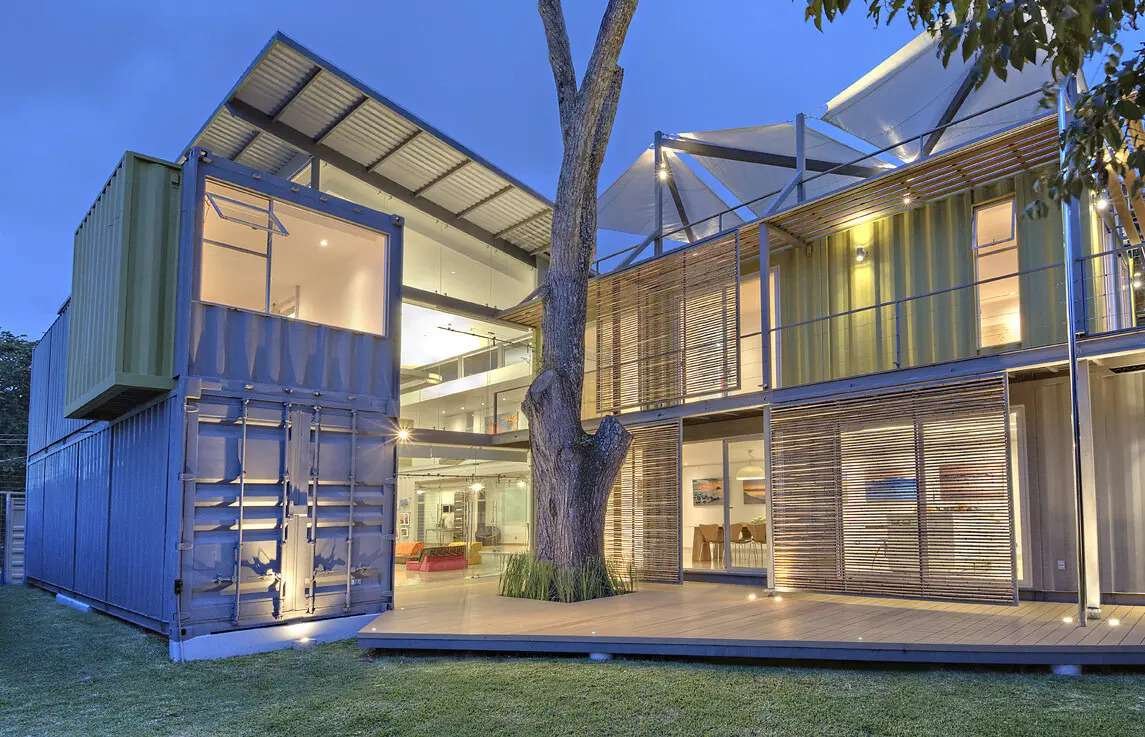
2. 3D Volumetric Systems: Entire room units (including plumbing, electrics, and finishes) completed in a factory and stacked like LEGO blocks on-site.
3. Key Advantages in the German Context
• Speed of Execution: Modular projects are typically completed 30% to 50% faster than traditional builds. Since ground preparation and factory production happen simultaneously, the "time-to-market" is slashed.
• Precision Engineering: Built in climate-controlled environments, modules bypass the "Pfusch am Bau" (construction defects) often caused by bad weather or human error on-site.
• Minimal Urban Disruption: In dense cities like Berlin, Munich, or Hamburg, modular construction reduces noise, dust, and traffic congestion, as the "construction" phase on-site is reduced to mere days of assembly.
4. Regulatory and Architectural Hurdles
Despite its growth, the industry faces specific German bureaucratic challenges:
• Building Permits (Baugenehmigung): German building codes are decentralized across 16 federal states (Bundesländer). While the "Typengenehmigung" (type approval) now allows a single design to be used across multiple states, local zoning laws still pose delays.
• The "Plattenbau" Stigma: There remains a lingering cultural association between prefabricated housing and the monotonous socialist-era apartment blocks of East Germany. Modern firms are countering this with high-end architectural finishes and "serial" yet customizable designs.
5. Leading Industry Players
The German market is dominated by several specialized firms that have scaled industrial production:
6. The Outlook
The future of German construction is increasingly hybrid. We are seeing a move toward "Serial Construction" (Serielles Bauen), where digital twins (BIM) are used to design flexible modules that can be mass-produced but individually configured. As Germany strives for climate neutrality by 2045, the efficiency and circularity of modular systems are no longer just an alternative—they are becoming the standard.
The Rise of Modular Construction in Germany: A Structural Shift